
You Can't Fix What You Can't See: The Cycle Time Blindspot Costing FQHCs Patients and Revenue

Sam Stroman



FQHCs lose significant throughput and revenue to operational inefficiencies that are invisible without cycle time data. This post breaks down what Care Operations measurement actually reveals — and why seeing it clearly is the first step to fixing it.
Subscribe to our newsletter today

Ask a Clinical Director at almost any FQHC to tell you their average door-to-provider time, and you'll get one of two answers: a number pulled from memory—usually optimistic—or a shrug.
Neither is data. And both are costing clinics more than they realize.
The Invisible Bottleneck
In most clinics, operational knowledge lives in people's heads. The experienced MA who knows that Room 3 always runs slow on Tuesdays. The provider who senses their afternoon schedule is about to derail. The front desk lead who can feel when a bad day is coming.
That institutional knowledge is genuinely valuable. But it doesn't scale. It doesn't transfer when staff turn over. It doesn't surface in a grant report or a board meeting. And it isn't catching the problems you don't already know to look for.
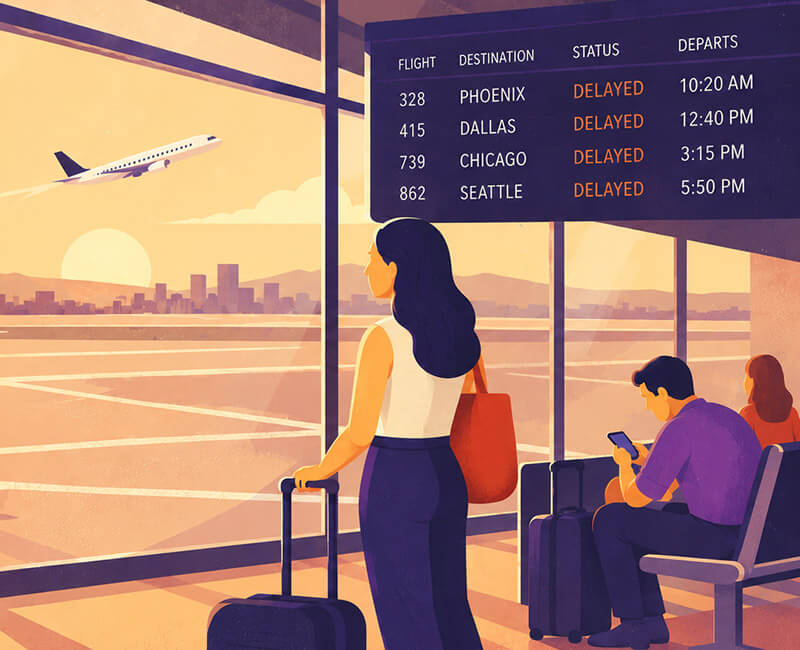
Cycle time—the actual measured time from patient arrival to discharge, broken down by phase—is the clinical equivalent of air traffic control radar. Without it, you're directing traffic based on gut feel and radio silence. Some flights land fine. Others don't, and you find out after the fact when someone complains.
What the Data Actually Shows
When Adelante Healthcare—one of Arizona's largest FQHCs—implemented Care Operations across their sites, one of the first things that surfaced was a pattern nobody had fully articulated before: patients who were roomed and then left alone for 15 or more minutes before seeing a provider weren't just waiting. They were quietly deciding whether to come back.
Alone time, the minutes a patient sits in an exam room with no staff contact, is one of the clearest predictors of patient satisfaction and return visit rates. It's also almost entirely invisible without real-time room status data.
A true Care Operations framework doesn't just measure it. It flags it the moment it's happening, so someone can check in before the experience turns into a complaint—or a lost patient.
The Revenue Math Nobody Does Out Loud
Here's a number worth sitting with: if an FQHC averaging 250 daily visits loses even 8% of those to preventable no-shows, incomplete encounters, or capacity inefficiency—that's 20 patients a day. At an average revenue of $180 per visit, that's $3,600 daily, $18,000 weekly, and roughly $900,000 annually.
That's not a patient experience problem. That's a P&L problem. And it almost always has an operational root cause that nobody has measured clearly enough to act on.
The challenge isn't that FQHCs lack the will to fix it. It's that they're trying to fix something they can't fully see. Cycle time data changes that equation. It turns "we think the bottleneck is somewhere in rooming" into "the 12-minute average wait between room assignment and first provider contact on Monday afternoons is the confirmed bottleneck."
Those aren't the same thing—and they don't have the same solution.
From Guessing to Knowing
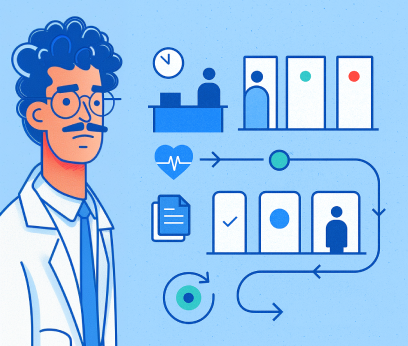
At Grace Health in Michigan, the operations team went from tracking patient flow with handwritten flags and clipboards to a live Care Operations dashboard showing real-time room status, provider location, and automated staff alerts. The shift wasn't just about swapping tools. It was about moving from reactive clinic management to proactive clinic management.
When your team can see that a provider is running 22 minutes behind at 10am, they can act on that before 2pm becomes a crisis. When you know that rooming consistently takes 8 minutes longer on Fridays, you can investigate why—not guess, adjust, and guess again.
Evidence-based operations isn't a philosophy. It's the operational difference between managing a clinic and actually running one.
The FQHCs seeing the strongest throughput gains right now aren't the ones with the newest buildings or the biggest budgets. They're the ones that stopped guessing and started measuring.
Ready to see what Care Operations looks like in your clinic? Request a demo—we'll show you exactly where your cycle time data is hiding and what it would take to surface it.
Lorem ipsum dolor sit amet consectetur iaculis orci dignissim eget egestas tellus auctor eget massa morbi maecenas integer tincidunt elit proin mauris purus.
Sam Stroman



© Stat

